Ayurvedic Supplement Manufacturing is the controlled process of turning traditional formulations into consistent, finished products. It may involve selecting herbs, checking their identity, cleaning and drying them, and preparing them for blending. Depending on the product, the result may be a powder, capsule, tablet, or liquid. Each step can affect the final product. A small change in moisture, particle size, or ingredient ratio may alter how a batch looks and handles.
Reliable manufacturing depends on more than mixing ingredients. Suppliers and manufacturers need clear specifications, documented procedures, and checks for identity, strength, and potential contaminants. Batch records help teams trace ingredients and understand what happened during production. Packaging also matters: containers should protect the product from conditions such as light and moisture. Testing and quality controls help verify that the finished product meets its stated specifications, though they cannot guarantee a particular health outcome. The process is not as simple as it may look. Traditional use can guide formulation, but it does not replace careful production controls or evidence-based communication. Requirements may also vary by market, so manufacturers should follow the standards that apply where their products are made and sold. This guide explains the main stages, the quality practices behind them, and the questions worth asking when evaluating an Ayurvedic supplement manufacturer. A label is only a starting point.
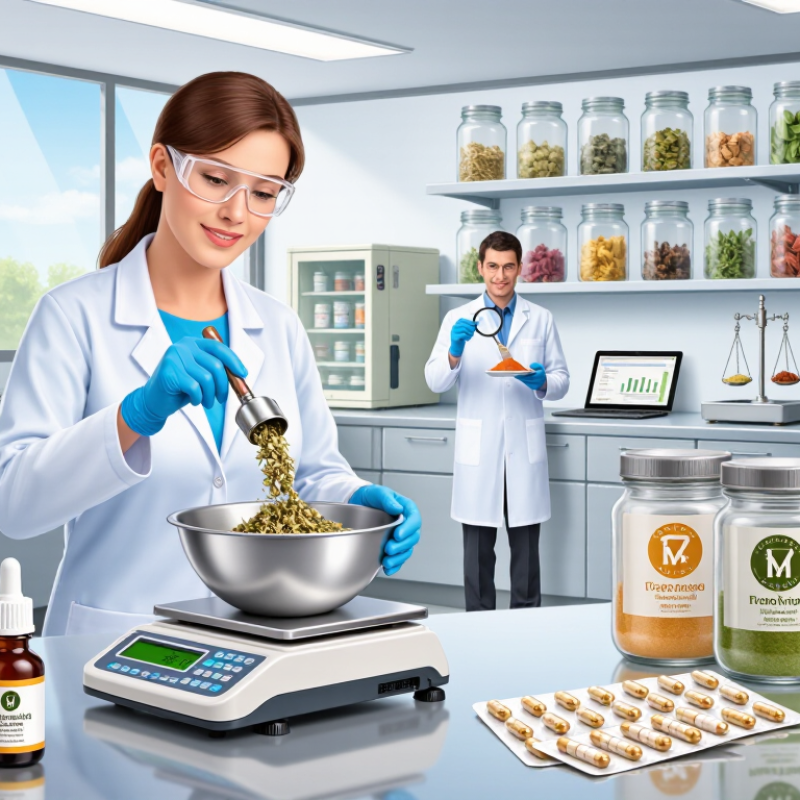
Ayurvedic supplement manufacturing is the controlled process of turning ingredients used in Ayurvedic traditions into consistent products. These may include powders, capsules, or liquids. The work begins by identifying each material: its botanical name, plant part, origin, and condition. Leaves, roots, and seeds are not interchangeable. Moisture, particle size, and storage can affect how a batch handles and how evenly it can be measured. Details matter.
Manufacturers inspect incoming materials, clean or mill them as needed, and blend measured ingredients according to a defined formula. Some products use extracts, which require controlled preparation and clear records of the method. Quality checks may cover ingredient identity, microbes, and contaminants, as well as whether a batch matches written specifications. The aim is consistency, not a promise that every traditional formula has the same evidence or effect. That distinction is easy to blur. Good manufacturing also relies on traceable records, clean equipment, and packaging that protects contents from moisture or light. It sounds simple. Even careful systems have limits: natural materials vary, and a specification may miss details that matter in practice.
| Manufacturing Dimension | Typical Activities | Quality Controls and Records | Purpose |
|---|---|---|---|
| Product and formula definition | Define the intended dosage form, ingredient list, serving size, specifications, and manufacturing instructions. | Approved formula, ingredient specifications, batch instructions, and documented change controls. | Establishes what is being made and the criteria used to assess each batch. |
| Raw-material sourcing and receipt | Receive botanical, mineral, or other permitted ingredients from qualified suppliers; assign identification and lot details. | Supplier records, receipt checks, lot traceability, and quarantine status pending quality review. | Supports traceability and helps prevent the use of unapproved or incorrectly identified materials. |
| Ingredient identification and testing | Confirm that incoming materials match their documented identity and meet applicable specifications. | Risk-based testing may include identity, strength or composition, microbial quality, and screening for relevant contaminants such as heavy metals or pesticides. | Verifies material suitability before it enters production; tests depend on the ingredient and applicable requirements. |
| Preparation and processing | As appropriate to the ingredient, clean, dry, cut, mill, sieve, or extract botanical materials; prepare other ingredients according to the approved process. | Documented processing conditions, equipment-cleaning records, in-process checks, and controls to avoid mix-ups or cross-contamination. | Produces material in a controlled form suitable for blending or further processing. |
| Blending and batch uniformity | Combine ingredients in defined proportions using a validated or otherwise controlled mixing process. | Batch records, ingredient reconciliation, mixing parameters, and suitable checks for blend uniformity where required. | Helps ensure the finished batch consistently reflects the approved formula. |
| Dosage-form production | Convert the blend into the specified form, such as capsules, tablets, powders, or liquid preparations. | In-process checks may include fill or unit weight, appearance, and other dosage-form-specific parameters. | Creates a consistent, usable product in the form described by its specifications. |
| Finished-product testing and release | Evaluate representative finished-product samples against established specifications before release. | Testing may cover identity, strength or composition, microbial quality, and other relevant attributes; results and release decisions are documented. | Provides evidence that a batch meets its predefined acceptance criteria. |
| Packaging, labeling, and traceability | Package the product in a suitable container and apply the approved label and lot identification. | Packaging checks, label reconciliation, lot coding, and records linking finished units to their batch and ingredient lots. | Protects the product and supports accurate identification and traceability. |
| Storage and stability | Store finished goods under specified conditions and assess product quality over time as appropriate. | Storage-condition records and stability data used to support the assigned shelf life and storage directions. | Helps maintain product quality through its stated shelf life. |
Manufacturing controls and regulatory requirements vary by product, ingredients, intended market, and dosage form. The listed tests are examples; applicable specifications should be established for each product.
Record its botanical name, plant part, source, harvest season, and processing method. A root and a leaf are not interchangeable.
Use suitable methods such as microscopy or chromatographic fingerprinting. DNA testing may help with raw plants, but can be less useful after extraction.
Ask for traceable batch records and representative samples. A passing certificate alone may not reveal weak controls.
Testing can cover identity, strength, microbes, pesticides, heavy metals, and residual solvents. The exact checks depend on the ingredient and its risks.
No. A test covers only the sample tested. Keep retained samples and compare results across batches. This is easy to miss.
Formulators may consider taste, warmth, heaviness, intended use, and individual constitution. These ideas guide choices, but do not replace safety checks.
They can vary in strength, texture, smell, and composition. Standardizing one marker may improve consistency, but may not represent the whole herb. Not always.
Consider allergies, medication interactions, contamination, and differences in individual response. Avoid promising disease treatment or prevention. That deserves more attention.
Ayurvedic Supplement Manufacturing is the process of turning traditional Ayurvedic concepts into carefully made supplements. It begins with selecting ingredients that are suitable for the intended product and verifying their identity, quality, and consistency. Formulators then combine ingredients with attention to Ayurvedic principles, product purpose, and appropriate serving formats, while maintaining clear specifications for every component.
Processing and testing help ensure that products are consistent and meet established quality standards. Steps may include controlled preparation, checks for purity and composition, and review of finished batches before release. Packaging is selected to protect product quality, and labels provide clear information about ingredients, directions, storage, and applicable cautions. Throughout manufacturing, responsible documentation and compliance with relevant regulations support product safety, transparency, and consumer confidence.