

Comprehensive Technical Industry Whitepaper: Next-Generation OEM Contract Blending & Batch Homogeneity Engineering
In the rapidly evolving global marketplace for nutraceuticals, functional food ingredients, sports nutrition, and specialty botanical formulations, selecting a contract blending manufacturer is no longer merely a procurement transaction. It is a critical strategic partnership that directly impacts product efficacy, regulatory compliance, brand equity, and supply chain scalability. Custom OEM (Original Equipment Manufacturer) contract blending demands an intricate balance between mechanical precision engineering, rigorous analytical quality assurance, and dynamic ingredient compatibility management.
As consumer demand shifts aggressively toward clean-label products, micro-encapsulated bioactive compounds, and non-artificial functional matrixes, industrial contract manufacturing facilities must maintain state-of-the-art processing capabilities. This technical whitepaper explores the core methodologies of modern industrial blending, critical manufacturing parameters, emerging global sourcing trends, quality compliance frameworks, and actionable criteria for evaluating enterprise OEM partners.
1. Technical Core of Industrial OEM Contract Blending: Particle Engineering & Homogeneity
At its fundamental engineering level, contract powder and liquid blending is governed by fluid dynamics, particle morphology, bulk density harmonization, and shear energy distribution. Achieving batch-to-batch consistency requires overcoming inherent physical challenges such as segregation, agglomeration, static charge accumulation, and hygroscopic degradation.
To achieve uniform spatial distribution without damaging thermal-sensitive ingredients (such as active enzymes, probiotics, or volatile aromatic esters), custom OEM blending facilities utilize specialized blending architectures tailored to the physical attributes of the raw material inputs:
- High-Shear Fluidized Bed Blending: Ideal for cohesive fine powders and hydro-soluble gums where rapid mechanical de-agglomeration is required alongside liquid micro-atomization spraying.
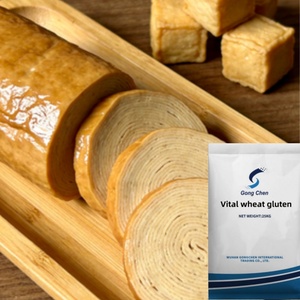
- Ribbon & Paddle Blender Systems: Engineered for large-scale bulk ingredient homogenizations (e.g., vital wheat gluten, maltodextrin, protein isolates) where gentle low-energy tumbling prevents particle attrition while achieving uniform bulk density.
- V-Blenders and Double-Cone Tumblers: Utilized for fragile botanical powders, granular nutriments, and low-dose mineral premixes that require complete vessel turnover without mechanical shear heat generation.
- Aseptic Liquid & Emulsion Processing Lines: High-pressure homogenizers operating up to 1,500 bar to reduce droplet sizes in oil-in-water emulsions, preventing phase separation in functional syrups, liquid concentrates, and dipping pastes.
2. Factory Capabilities & Quality Management Infrastructure
Drawing directly from thirty-eight years of operational expertise across US FDA-registered and FSSC 22000-certified manufacturing complexes, scalable OEM production relies on dedicated processing suites designed to eliminate cross-contamination risks. Facilities operating under cGMP (current Good Manufacturing Practices) enforce strict separation between allergen-processing lines (e.g., wheat gluten, soy paste) and non-allergen or botanical extraction zones.
Analytical Laboratory Control
Equipped with High-Performance Liquid Chromatography (HPLC), Gas Chromatography (GC), Atomic Absorption Spectrophotometry, and automated dissolution testers to verify active compound potency and assay claims prior to release.
Cleanroom & Environmental Controls
Class 100,000 (ISO 8) climate-controlled blending environments featuring positive differential pressure, HEPA filtration, and strict relative humidity (RH < 35%) control for moisture-sensitive hygroscopic actives.
Multi-Format Packaging Lines
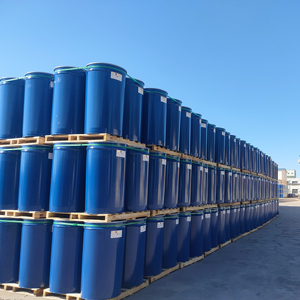
Fully integrated primary and secondary packaging capabilities—ranging from 220L aseptic steel drums, tote bins, and bulk sacks to consumer-ready pouches, rigid tubs, sachets, and stick packs.
Full batch traceability is maintained through SAP-integrated ERP systems. Every raw material lot undergoes rigorous identity testing (FTIR fingerprinting), microbiological screening (Salmonella, E. coli, yeast & mold), heavy metal screening (ICP-MS for Lead, Arsenic, Cadmium, Mercury), and pesticide residue verification before entering the validated weighing and dispensing suites.
3. Strategic Sourcing Trends & Macro Industry Transformations (2025–2030)
The industrial landscape for custom contract manufacturing is undergoing structural shifts driven by evolving consumer expectations, regulatory tightening, and technological breakthroughs. Procurement directors and product innovation managers must align with several dominant trends shaping the future of OEM contract blending:
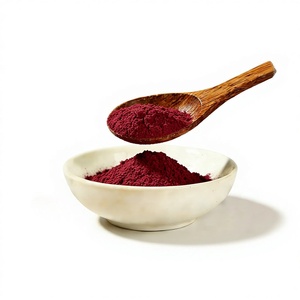
A. Clean-Label Formulation & Additive Elimination: Modern consumers scrutinize ingredient labels for artificial anti-caking agents (such as silicon dioxide or synthetic silicates), artificial preservatives, and synthetic colorants. OEM factories are pioneering natural alternative flow agents, utilizing native rice starches, organic maltodextrin carriers, and dehydrated vegetable powders (such as beet root or pumpkin powders) to maintain powder fluidity without sacrificing clean-label status.
B. Microencapsulation & Targeted Bioavailability: Hydrophobic nutrients, volatile aromas, and unstable actives (such as liposomal vitamin C, coenzyme Q10, or fat-soluble nutrients) are increasingly processed using advanced carrier matrixes like Alpha-Cyclodextrin. Molecular encapsulation shields sensitive compounds against oxidative degradation, masks bitter botanical off-notes, and improves intestinal absorption kinetics.
C. Supply Chain Resiliency & Dual-Sourcing Technical Standardization: Global trade friction and climate-induced agricultural volatility have forced enterprise brands to shift away from single-source raw material dependencies. Contract blenders are expected to maintain comprehensive equivalence databases—ensuring that alternative origins of ingredients (e.g., vital wheat gluten or yeast extract powders) can be seamlessly integrated into existing formulas without altering bulk density, dissolution rate, or organoleptic properties.
D. Sustainability, Upcycling, and Energy-Efficient Manufacturing: Forward-thinking OEM factories are adopting low-temperature spray drying, solar-assisted thermal drying for dehydrated vegetables, and zero-liquid-discharge (ZLD) wastewater treatment. Furthermore, secondary packaging options are rapidly transitioning toward recyclable mono-layer plastics, biodegradable drum liners, and post-consumer recycled (PCR) containers.
4. Technology Development & Process Optimization Engineering
The application of Industry 4.0 paradigms to custom OEM blending has introduced real-time Process Analytical Technology (PAT). Near-Infrared (NIR) spectroscopy probes installed directly within commercial blender drums allow inline monitoring of blend uniformity without interrupting the mixing cycle or taking manual samples. This eliminates human error, reduces batch cycle times by up to 30%, and guarantees absolute uniformity across multi-ton production runs.
Furthermore, computational fluid dynamics (CFD) modeling software is now routinely deployed during the pilot scale-up phase. By simulating particle trajectory, shear stress distribution, and thermal generation within varying blender geometry types, formulation engineers can predict potential scale-up bottlenecks before allocating valuable raw material inputs for full-scale commercialization runs.