High-purity raw materials, functional carrier matrices, and specialized bio-actives engineered for global food, supplement, and cosmetic manufacturing.
Fully compliant with US FDA, FSSC 22000, and global pharmaceutical quality systems to guarantee absolute batch reproducibility.
In-house testing equipped with High-Performance Liquid Chromatography (HPLC), Gas Chromatography (GC), and UV-Vis spectrophotometry to ensure active marker consistency across every batch.
Operations run under US FDA registration, Intertek-certified FSSC 22000, GMP, HACCP, FSSAI, AYUSH, and Halal standards, backing seamless international dossier validation.
Dedicated production blocks engineered for annual capacities up to 400M tablets/caplets, 140M capsules, 100M nutritional diskettes, 70M oral liquid units, and 35,000 MT of powders.
Proprietary molecular encapsulation, taste-masking technology, and micro-granulation engineered to optimize gastrointestinal release rates and active payload delivery.
End-to-end management spanning concept screening, excipient compatibility testing, accelerated stability studies, label-claim verification, and export carton design.
Qualified vendor verification ensuring complete Certificate of Analysis (COA) traceability from raw botanical harvest to finished, tamper-evident commercial units.
The global contract manufacturing paradigm for functional foods, dietary supplements, and nutraceutical ingredients has undergone a structural evolution. Brand owners and enterprise procurement managers no longer look for simple toll-blenders; they demand integrated Contract Research and Manufacturing Services (CRAMS) partners capable of delivering validated chemical stability, regulatory compliance, and demonstrable Information Gain in product performance.
Strategic Insight: Modern OEM formula customization requires aligning molecular stability, particle morphology, and international regulatory dossiers (such as US FDA CFR Title 21 and EU Food Safety Regulations) prior to commercial-scale batch validation.
Raw active ingredients often suffer from poor solubility, rapid oxidation, or organoleptic degradation. Modern OEM facilities utilize advanced bio-encapsulation matrices, such as Alpha Cyclodextrin host-guest inclusion complexes, to entrap lipophilic compounds, volatile essential oils, and sensitive flavor profiles. By creating a protective molecular cavity, OEM formulators can dramatically increase the shelf-life of delicate compounds while converting viscous liquids into free-flowing, directly-compressible powders.
Similarly, carrier technology utilizing tailored Maltodextrin DE (Dextrose Equivalent) gradients allows contract manufacturers to control bulk density, dissolution velocity, and hygroscopicity in solid beverage bases and meal replacement formulations. Matching the correct excipient matrix to the botanical active prevents phase separation and maintains active potency throughout the 24-month shelf life.
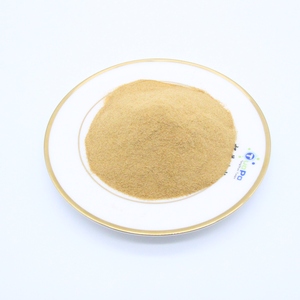
Consumer sentiment has aggressively shifted away from synthetic flavor enhancers (such as monosodium glutamate/MSG) and chemical preservatives. OEM processing factories must innovate using high-nucleotide, naturally-fermented Yeast Extract Powders to impart savory beef and chicken flavor notes into sauces, plant-based proteins, and prepared meals. These natural yeast hydrolysates provide high concentrations of free glutamic acid and 5'-ribonucleotides, allowing clean-label declarations while maintaining robust sensory profiles.
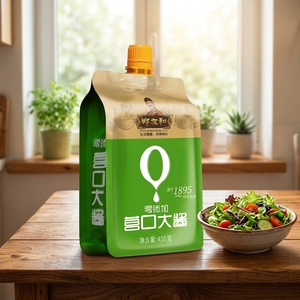
In sauce and condiment manufacturing, traditional fermentation techniques—such as long-term aging for Yingkou Soybean Paste—yield natural preservation through controlled osmotic pressure and organic acid production. Factories offering OEM private labeling for clean-label sauces must combine heritage fermentation microbiology with modern automated hot-fill aseptic bottling systems.
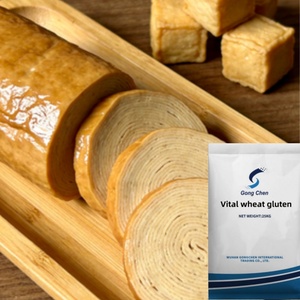
In high-throughput bakery and industrial food processing, consistent dough rheology and gas-retention capabilities are critical. Vital Wheat Gluten functions as an essential structural protein network, binding water at ratios exceeding 150% of its dry weight. Contract formulation suppliers evaluate gluten performance based on viscoelasticity, extensibility, and viscoelastic recovery index. Supplying standardized gluten allows commercial bakeries to compensate for flour protein variations across seasonal wheat harvests.
Beyond oral ingestion, OEM formula development encompasses topical cosmeceuticals. Actives such as Kojic Acid require specialized formulation handling due to their susceptibility to oxidative discoloration when exposed to light or heat. Premium OEM suppliers employ chelation systems, anti-oxidative buffering agents, and specialized pH-stabilized emulsion bases to prevent Kojic Acid degradation, ensuring that the final skin-brightening cream maintains its 99% active target strength throughout commercial distribution.
Enterprise procurement directors must position their supply chains to accommodate major industry transformations over the next decade:
A systematic, audit-ready framework tracking your custom product from concept brief to commercial shipment.
Review target claims, dosage constraints, active payload specifications, and destination market regulatory limits.
Excipient selection, organoleptic tuning, particle size optimization, and initial lab-scale analytical assay verification.
Trial runs on production-representative equipment to validate flowability, compressibility, and packaging compatibility.
Accelerated and real-time ICH stability storage to validate label claims, microbiological safety, and shelf-life date.
High-volume execution backed by automated in-line inspection, batch release documentation, and global export clearance.
Technical clarity for procurement officers, QA managers, and brand strategists.
MOQs depend on the selected dosage delivery platform and ingredient scarcity. Pilot development batches typically start at 1,000 units or 100 kg for specialty raw powder blends. Commercial production scales from 50,000 to 100,000 units for tablets, capsules, and liquids, and 1 to 5 Metric Tons for industrial food ingredients.
We execute strict bilateral Non-Disclosure Agreements (NDAs) prior to receiving any raw technical data. Proprietary master batch records (MBRs) are managed within segregated digital ERP systems, ensuring client-owned IP remains completely confidential throughout formulation, scale-up, and production phases.
Every shipment is issued with a comprehensive Certificate of Analysis (COA) generated by our accredited QC laboratory. COAs detail physical characteristics, assay purity of key actives, heavy metal limits (Pb, Cd, Hg, As), microbial counts (TPC, Yeast & Mold, E. coli, Salmonella), loss on drying, and pesticide residue screens.
Yes. Our dedicated regulatory affairs department specializes in multi-jurisdictional compliance. We adjust excipient selections, botanical extract ratios, and vitamin/mineral overages to meet destination-specific regulatory thresholds, ensuring smooth customs clearance and label-claim legality.
Formulations undergo stability testing under International Council for Harmonisation (ICH) guidelines. Standard protocols include Accelerated Stability (40°C ± 2°C / 75% RH ± 5% RH) for 6 months and Long-Term Real-Time Stability (25°C ± 2°C / 60% RH ± 5% RH) tracking active marker retention, pH, and physical integrity.
Partner with an established contract manufacturer boasting 38+ years of technical experience, 850+ commercialized SKUs, and world-class regulatory standards.
Inquire Now