Fully Traceable Raw Materials Backed by Regulatory Dossiers, COA Validation, and Global Quality Accreditations
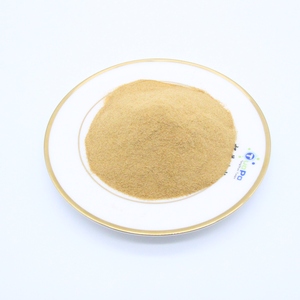
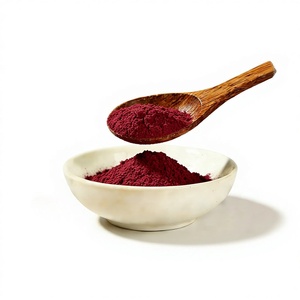
In an increasingly stringently monitored international trade environment, securing high-quality raw materials, functional food ingredients, and active pharmaceutical/cosmeceutical compounds requires far more than basic manufacturing capability. It demands comprehensive regulatory strategy, robust batch-to-batch analytical control, and an unyielding commitment to global quality standards. As a premier China Regulatory Support Supplier & Exporter, our operational baseline integrates scientific precision, regulatory affairs mastery, and vertically integrated industrial output.
Over the past three decades, global market entry barriers for dietary supplements, functional foods, clean-label condiments, and cosmetic active ingredients have escalated. Importers across North America, the European Union, the GCC region, and Southeast Asia face complex regulatory scrutinies including FDA FSMA mandates, EFSA Novel Food authorisations, REACH compliance, and stringent heavy-metal/pesticide residue thresholds. Our mission is to bridge the gap between high-capacity Chinese manufacturing excellence and strict international regulatory compliance, ensuring that every batch shipped carries guaranteed market access.
Our centralized testing facilities and contract research and manufacturing services (CRAMS) operate under strict international guidelines. Outfitted with state-of-the-art chromatographic and spectroscopic instrumentation, our quality verification matrix covers every stage of the supply chain:
Every lot undergoes rigorous HPLC, GC, UV-Visible Spectrophotometry, and Atomic Absorption Spectrometry to verify active content assay, solvent residue, heavy metals, and microbiological counts.
Full support for US FDA Facility Registration, FSSC 22000, ISO 22000, HACCP, GMP, FSSAI, Halal, Kosher, and AYUSH licensing dossiers tailored for direct customs clearance.
Providing complete technical documentation packages: Certificate of Analysis (COA), Stability Testing Data (ICH Guidelines Q1A), Flow Charts, GMO Declarations, and BSE/TSE Free Statements.
To assist global procurement directors and regulatory affairs officers in evaluation, the following matrix outlines the key technical metrics, compliance standards, and regulatory clearance routes for our primary raw material product portfolio:
| Product Line / Ingredient | Key Regulatory & Quality Standard | Assay / Technical Benchmark | Primary Compliance Dossiers Provided |
|---|---|---|---|
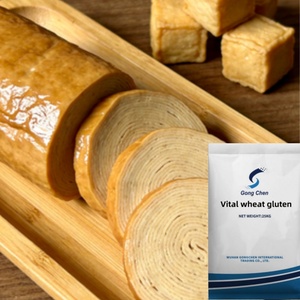
| Vital Wheat Gluten | GB 2760, ISO 22000, Halal, Kosher | Dry Protein (N×6.25) ≥ 75%, Water Absorption ≥ 150% | Allergen Statement, Non-GMO Certification, COA, ISO Accreditation |
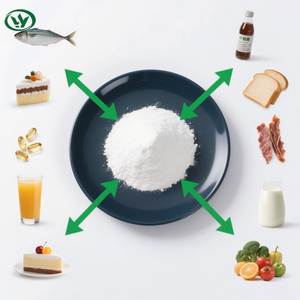
| Alpha Cyclodextrin Powder | US FDA GRAS, EFSA Novel Food, USP/EP Grade | Purity Assay ≥ 98.0%, Heavy Metals ≤ 5ppm | Molecular Encapsulation Stability Report, DMF Filing Support, COA |
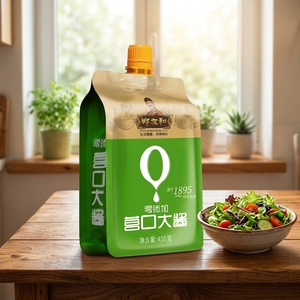
| Additive-Free Soybean Paste | Clean Label Certification, GB/T 24399 | Zero Preservatives/Artificial Colors, Total Nitrogen ≥ 1.0g/100g | Microbiological Clearance, Fermentation Process Validation, COA |
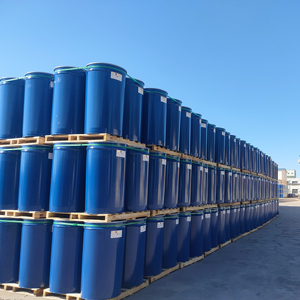
| 220L Concentrated Tomato Paste | Organic Certification (USDA/EU), HACCP | Brix 28-30% / 36-38%, Howard Mold Count < 40% | Pesticide Screen (300+ compounds), Heavy Metal Audit, Organic Certificate |
| Flavor Yeast Extract Powder | FSSC 22000, Halal, Kosher, Food Safety Grade | Amino Nitrogen ≥ 3.5%, Total Protein ≥ 50.0% | Flavor Precursor Profiles, Salt Content Validation, Allergen Free Cert |
| Organic Maltodextrin Powder | USDA Organic, EU Organic, ISO 9001 | DE Value Range (10-15 / 15-20), Moisture ≤ 6.0% | Organic Certificate, Solubility & Viscosity Curve, Batch COA |
| Red Beetroot Powder | Food Grade Dehydrated Standard, Kosher | Natural Betanin Assay ≥ 0.3%, 100% Mesh Pass Rate | Microbiological Analysis, Artificial Color Negative Test, Technical Specs |
| Cosmetic Grade Kojic Acid | EU Cosmetics Regulation EC 1223/2009, REACH | Purity Assay by HPLC ≥ 99.0%, Melting Point 152–156°C | Safety Data Sheet (MSDS), HPLC Chromatogram, Stability Study Report |
As international supply chains evolve under the dual pressures of geopolitical re-alignment and heightened consumer scrutiny, global buyers must anticipate structural shifts in ingredient sourcing. Our regulatory and intent mining teams have identified four decisive procurement trends dominating the global B2B landscape:
Consumer demand for "transparent labels" has transitioned from a niche preference to a mandatory retail threshold. Importers are actively divesting from synthetic emulsifiers, artificial flavor enhancers, and chemical colorants. Products like our Additive-Free Traditional Yingkou Soybean Paste and Red Beetroot Powder experience surging demand because they replace synthetic inputs with fermented, whole-food alternatives without compromising organoleptic shelf stability. Regulators now require clear provenance documentation to validate "non-artificial" marketing claims.
Bioactive nutrients—such as fat-soluble vitamins (A, D3, E, K2), lipophilic antioxidants, and volatile essential oils—frequently suffer from rapid oxidative degradation during storage and thermal processing. Advanced buyers are turning to host-guest molecular encapsulation matrices using host molecules like Alpha Cyclodextrin. This supramolecular structure protects fragile active ingredients from oxygen, light, and heat, expanding product shelf-life and ensuring label-claim compliance through the end of expiration dates.
Multinational food manufacturers and pharmaceutical companies are mandating Scope 1, 2, and 3 carbon accounting from their Chinese tier-1 suppliers. Bulk commodities delivered in sustainable, high-capacity formats—such as 220L steel drum aseptic tomato concentrates—drastically lower plastic waste and transportation carbon intensity per kilogram. Regulatory support suppliers must now provide verifiable supply chain life-cycle assessments (LCA) to meet corporate ESG governance frameworks.
Port-of-entry detentions by border control authorities (such as US FDA import alerts or EU RASFF notifications) represent catastrophic financial risks for global distributors. Modern procurement strategies no longer prioritize the lowest FOB price point. Instead, purchasing managers prioritize "Audit-Ready" suppliers capable of supplying pre-validated regulatory dossiers, robust stability testing under accelerated and real-time conditions, and guaranteed batch uniformity verified by accredited third-party laboratories.
To maintain market leadership, product development teams must align their R&D pipelines with emerging biological, chemical, and process technologies. The integration of advanced processing technologies in China's manufacturing hubs is establishing new benchmark capabilities:
Precision fermentation using targeted microbial strains is revolutionizing yeast extracts and flavor compounds, yielding high 5'-nucleotide profiles for natural savory depth without MSG additions.
Cyclodextrin inclusion technology isolates hydrophobic actives at a molecular level, dramatically increasing intestinal bio-accessibility while completely masking unpleasant off-tastes.
Gluten and functional carbohydrate modification allows for tailored dough elasticity, gas retention, and crumb texture in bakery applications, accommodating high-fiber and ancient-grain formulations.
Furthermore, in the cosmetics and dermatological actives sector, pure synthetic compounds like Kojic Acid Powder (99% HPLC) are being formulated alongside synergistic natural botanical matrices. This dual-action approach inhibits tyrosinase activity while reducing skin irritation, directly matching global consumer demands for high-efficacy yet skin-barrier-friendly cosmetic solutions.
Below are authoritative technical answers to common queries raised by international buyers, quality assurance directors, and supply chain managers when importing high-grade ingredients from China.
Every commercial export order is supplied with a comprehensive Technical Dossier. This package includes a batch-specific Certificate of Analysis (COA) issued by an ISO/IEC 17025 accredited laboratory, Heavy Metal & Pesticide Residue Screening Reports, Microbiological Clearance Certificates, Non-GMO Declarations, BSE/TSE-Free Statements, Allergen Flowcharts, and Material Safety Data Sheets (MSDS). For food ingredients and additives, we also provide Free Sale Certificates (FSC) and Health Certificates issued by official customs authorities.
Our Contract Research and Manufacturing Services (CRAMS) team operates an end-to-end product development model. We begin with pilot batch screening, excipient compatibility testing, and organoleptic evaluation. Once the bench prototype passes client specifications, our regulatory specialists review the ingredient deck against destination-market regulations (e.g., US FDA 21 CFR, EU Regulation 1169/2011). We then execute commercial scale-up across automated blending, compression, encapsulation, or liquid-filling lines with full batch-record traceability.
Raw plant materials undergo rigorous incoming inspection. We utilize High-Performance Liquid Chromatography (HPLC), Gas Chromatography-Mass Spectrometry (GC-MS), and Inductively Coupled Plasma Mass Spectrometry (ICP-MS) to quantify target active compounds while screening for over 300 pesticide residues, residual extraction solvents (according to ICH Q3C limits), and heavy metals (Lead, Cadmium, Arsenic, Mercury). Products such as our Red Beetroot Powder strictly meet both EU and US USP maximum residue limits (MRLs).
MOQs depend on the product category and packaging configuration. High-value active raw materials like Alpha Cyclodextrin or Kojic Acid feature low MOQs starting at 1kg to 25kg fiber drums to facilitate pilot testing and small-batch production. Bulk food commodities, such as Vital Wheat Gluten or 220L Tomato Paste Drums, are optimized for full container load (FCL) shipments (20ft/40ft containers). Standard lead time for standard items is 7–14 business days from PO confirmation, while custom formulation blending typically requires 21–30 business days including complete analytical release testing.
Stability studies are conducted in accordance with International Council for Harmonisation (ICH) guidelines Q1A(R2). Samples are placed in controlled stability chambers under Long-Term conditions (25°C ± 2°C / 60% RH ± 5% RH), Intermediate conditions (30°C ± 2°C / 65% RH ± 5% RH), and Accelerated conditions (40°C ± 2°C / 75% RH ± 5% RH). Physical appearance, active ingredient retention assay, moisture content, and microbiological purity are tested at defined intervals to validate 24-to-36-month shelf-life claims globally.
Selecting the right regulatory support supplier and exporter in China is a strategic decision that directly impacts brand reputation, regulatory compliance, and operational profitability. Our institutional advantages position us as a premier global manufacturing partner:
From direct crop sourcing and raw synthesis to advanced molecular encapsulation and automated cleanroom packaging, our end-to-end integration eliminates intermediary markup while guaranteeing total traceability.
Our dedicated regulatory team monitors changing food and chemical safety legislation across 60+ countries, pre-emptively updating technical specifications and dossier filings to protect your supply continuity.
Whether you require white-label packaging, private brand labelling, custom mesh particle sizing, or specialized carrier blending, our flex-manufacturing architecture accommodates custom production runs with agility.
Connect with our senior regulatory specialists and technical account managers to request batch samples, custom specification reviews, or comprehensive compliance dossiers.
Contact Us